

In the 2016 census, only 40% of the people in the Ku-ring-gai municipality had parents born in Australia. One of the goals of the Community Committee was to build our connectedness to the 60% whose parents are from different countries. The 4th largest of these groups is Indian in heritage and we therefore planned for our Indian members to be the focus of our Fellowship Meeting this week.
It was a delight to have five representatives of the Sikh Temple at Turramurra as our guests and to present them with a Community Caring Award for their provision of meals to those in need, especially during the bushfires of 2019-20 and the COVID-19 lockdown.
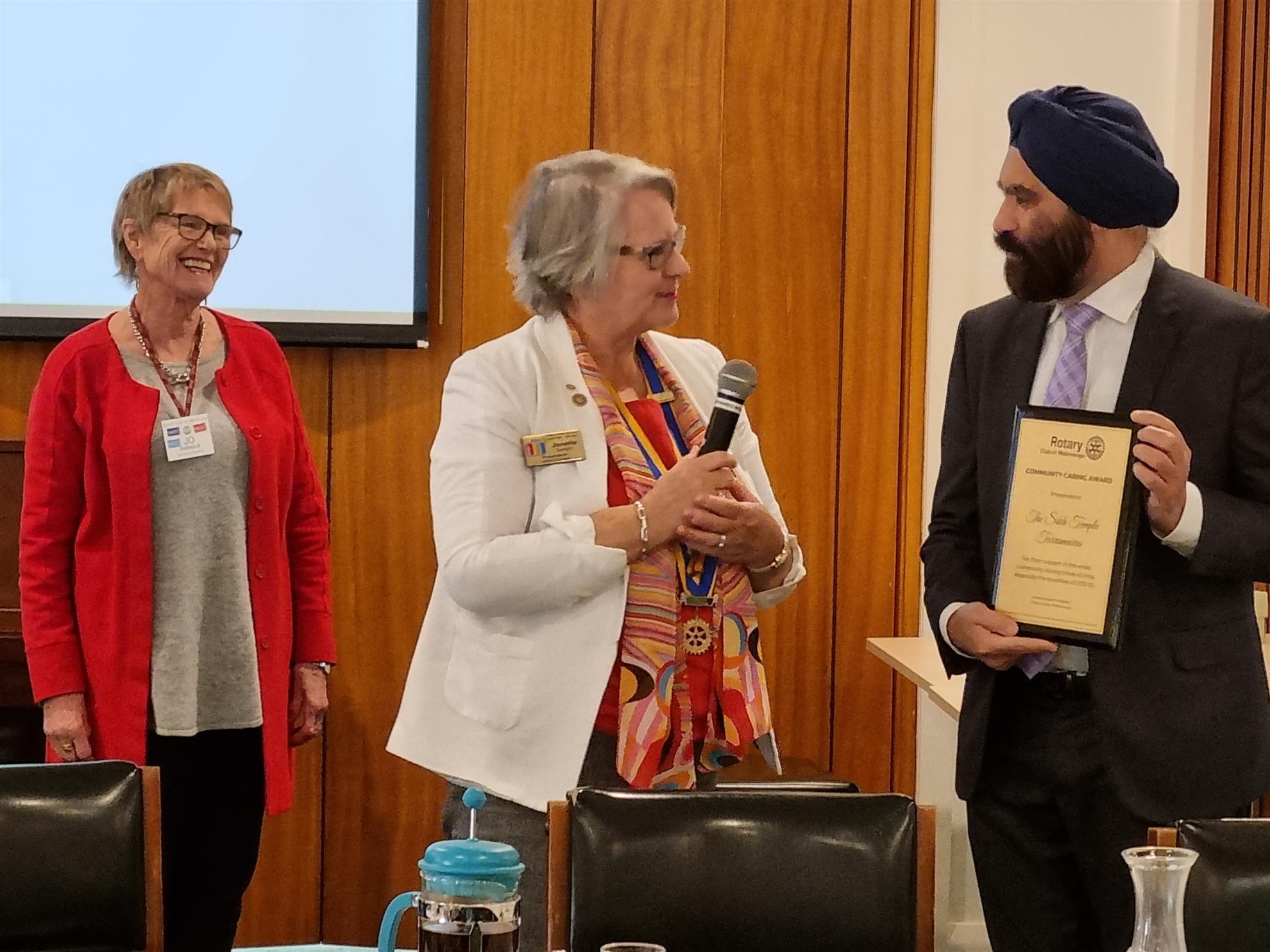
Mr Harbir Pal Singh Bhatia accepted the award on behalf of the Sikh community. In doing so he explained that the Sikh religion, which is 550 years old, was founded in response to the deep divisions in Indian society due to the caste system and to differences in religion. The turban, he said, was a form of dress that did away with the observable physical distinctions on which discrimination was in part based. For the Sikhs, there is but one God and all are His children; we each come to God by different paths and through different creeds, but it is the same loving God. A Sikh has three pillars to live by: to love God, to work hard to make an honest living and to share what he or she has with others who have too little.
Providing meals and hospitality is one of the ways the Sikhs fulfill their commitments, Harbir explained and said that what they had done in the bushfires was small enough but it was an expression of their values. He said they felt very humbled by the Rotary award and would hang their Community Caring plaque with pride
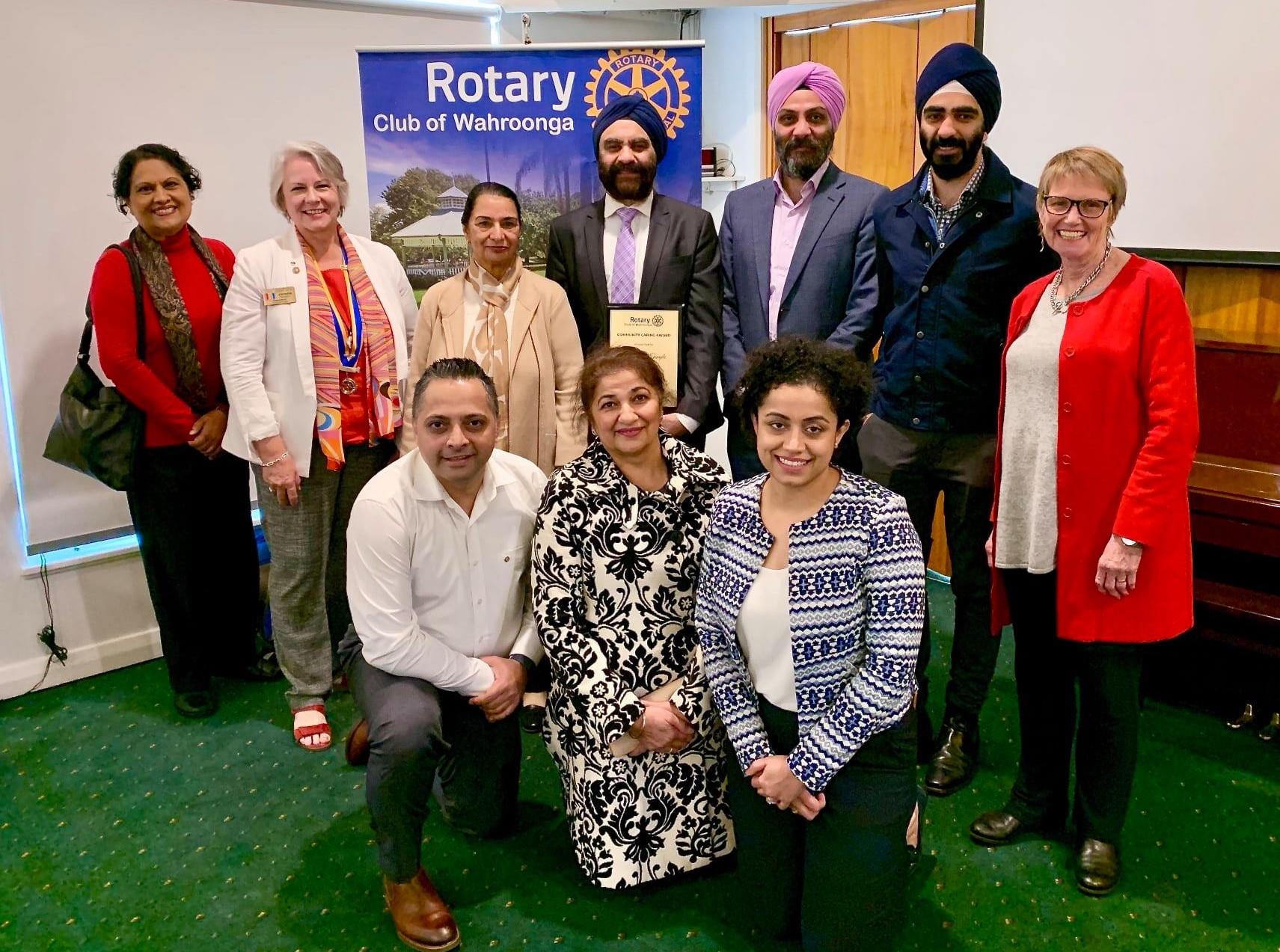
Left to right Rotary Club of Wahroonga meeting: Radha Simhadri Rotarian, Janelle Speight President RCWahroonga, Mrs Surjit Kaur Sahota,
Mr Harbir Pal Singh Bhatia, Mr Devpal Singh Bhatia, Mr Parneet Singh Bhatia, Jo Karaolis AM Rotarian,
Front Row: Sabarish Chirakkal Rotarian, Mrs Amarjit Bhatia, and Simran Talwar Rotarian and Sikh community.
Click on "Read More" below to catch up on the content from the modified Fellowship interviews including the background to some of the pandemic difficulties.
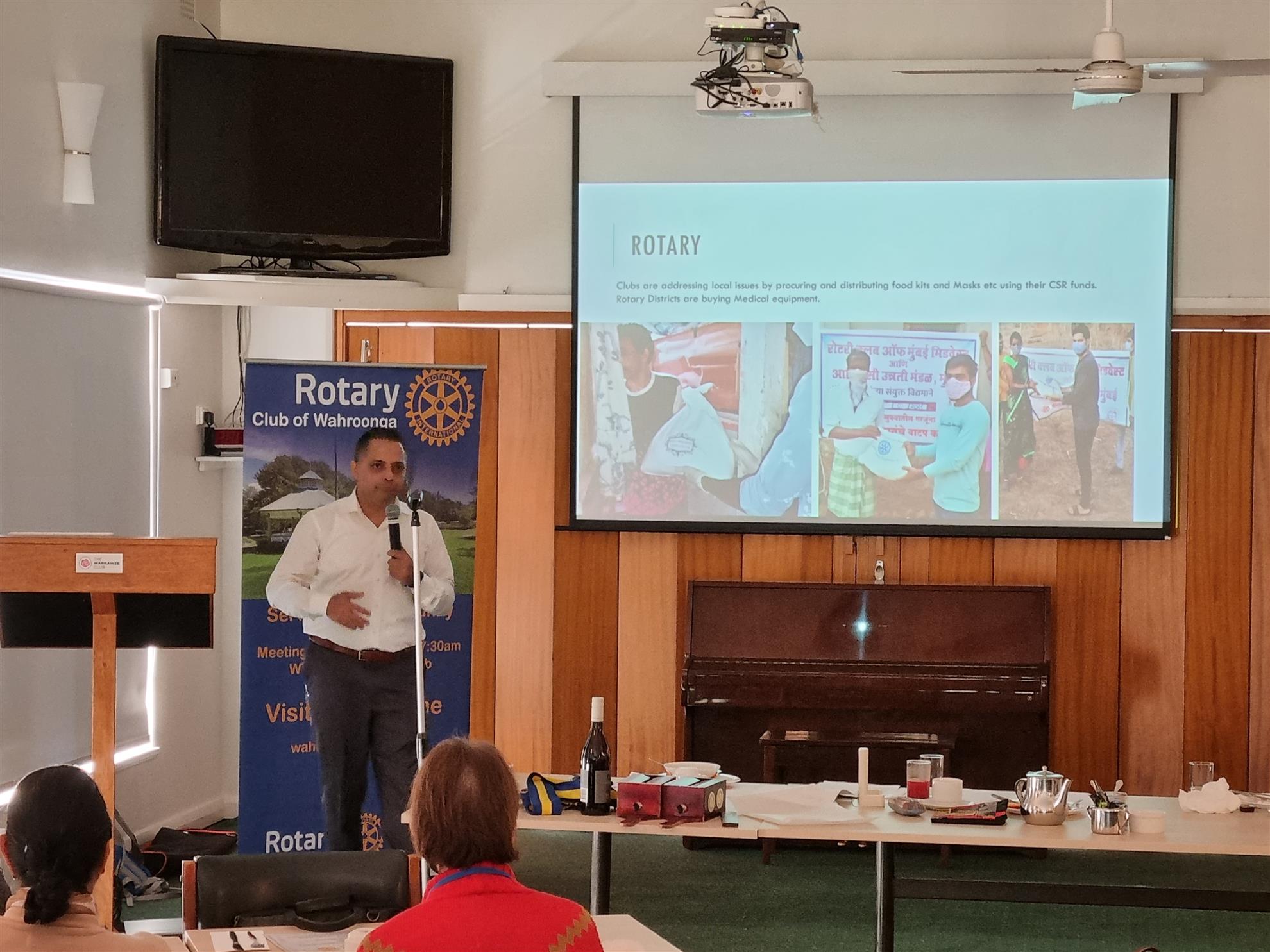
Since we planned the Fellowship meeting, events took over and all involved were highly agitated by daily revelations of the breakdown in supplies and support for people sick from the COVID virus in many parts of India. We therefore modified the usual Fellowship structure to allow time for a factual presentation showing the causes and extent of the current disaster and to appeal for help from the Club.
There was still time for us to learn that Simran and Sabarish come from very different parts of India with different customs and faiths, that they moved to Australia to further their PhD studies and that Sabarish is not daunted by the ‘brutal honesty‘ of Australians. Radha told us of her childhood in India and her US studies in audiology and how here in Australia she devotes her personal time to clinics she has established in Mysore, India for the early identification of hearing loss in children. Asked for an anecdote to illustrate what seemed weird to her in Australia,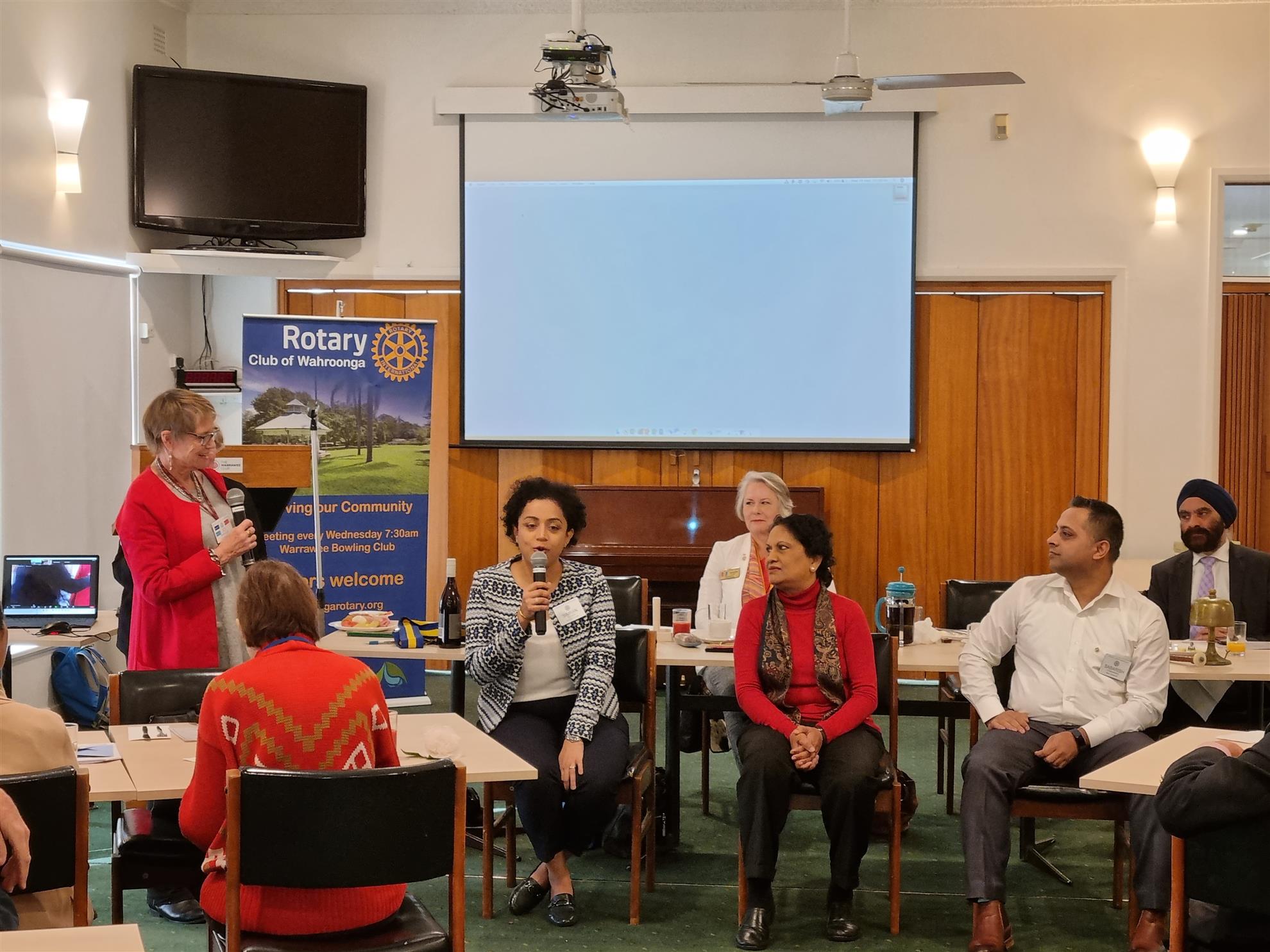 she told how she often makes trips from Sydney to Goulburn for work and has been asked afterwards, ‘How was the run?’. All 3 told us stories of their own families’ experience of the COVID pandemic in India. For Simran and Sabarish, it was most tragically borne home by the death of a 2-year-old nephew; for Radha, it was the experience of her clinics, with families left without medical supplies or even food by the breakdown in social structure and of children left orphaned and unprotected by the death of both their parents. The trio then spoke to us of a practical way we can get financial support to those in need through the Rotary Club of Mysore and be assured that the help will reach those who need it most.